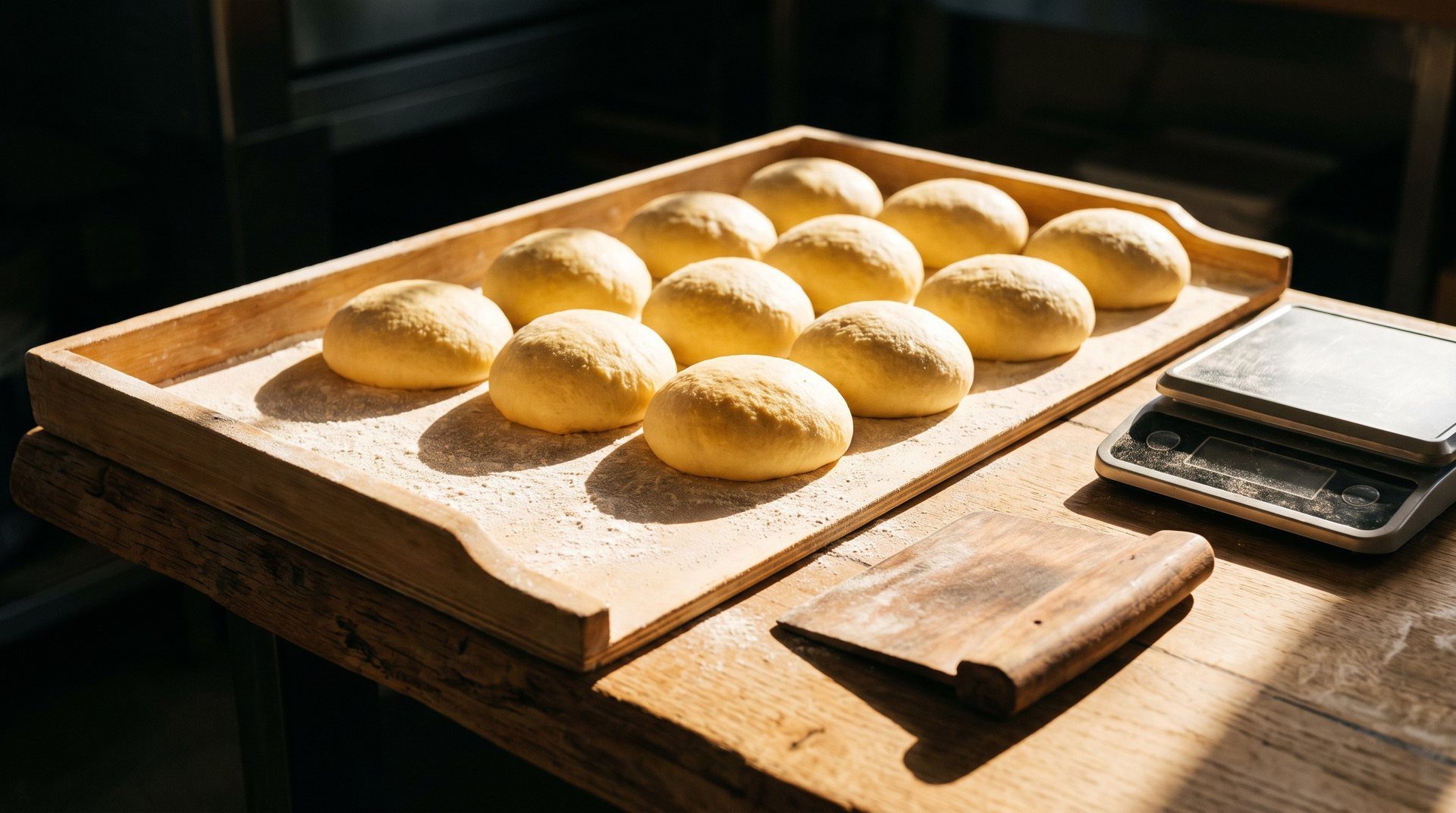
Flour
The P/L of a blend is not an average
We blend P and L separately, then divide. Averaging the individual ratios gives 0.95 where the true answer is 0.89 — and that is the difference between a dough you can open and one that springs back.
Pizzalove
From the grain of flour to the oven door: every step of your dough, calculated and justified.
Fermentation
48 hours at 4 °C and 8 hours at 20 °C become comparable. The model also accounts for the thermal inertia of your dough ball.
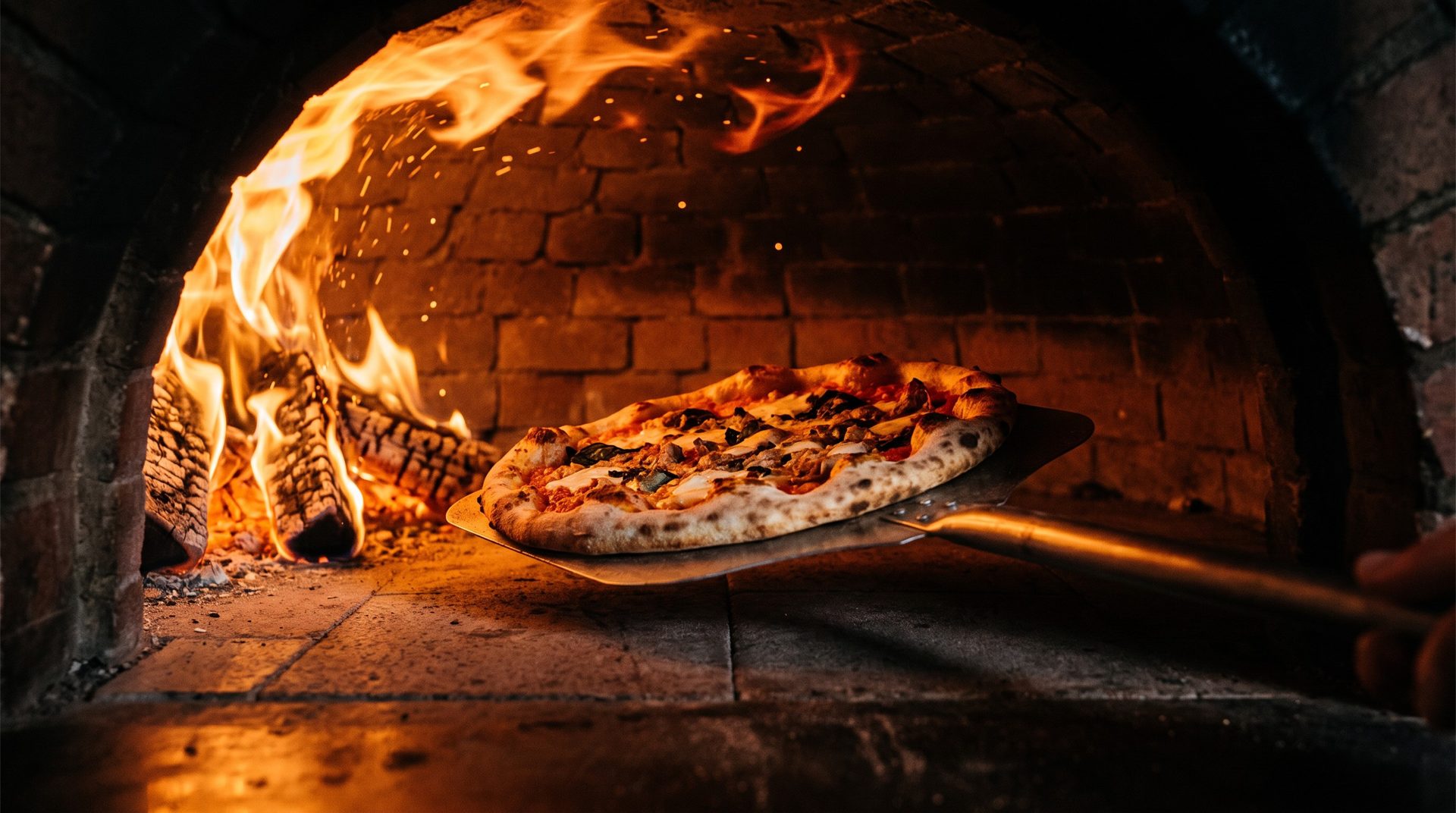
Heat
Thermal effusivity decides what happens to the bottom of the pizza, not the number on the dial.
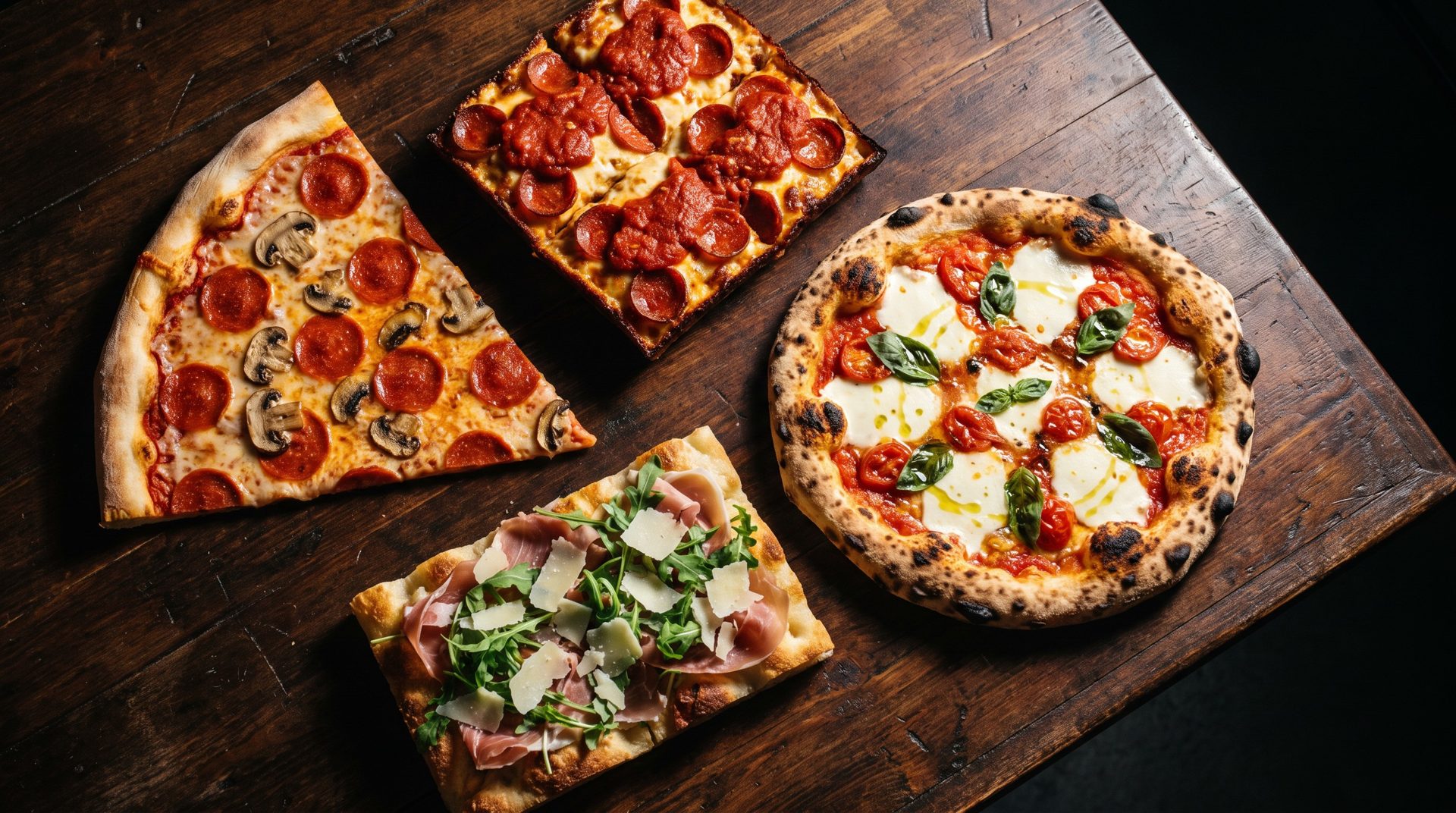
Twelve documented styles
Type your grams: the tool tells you which style you just made and what sets it apart.
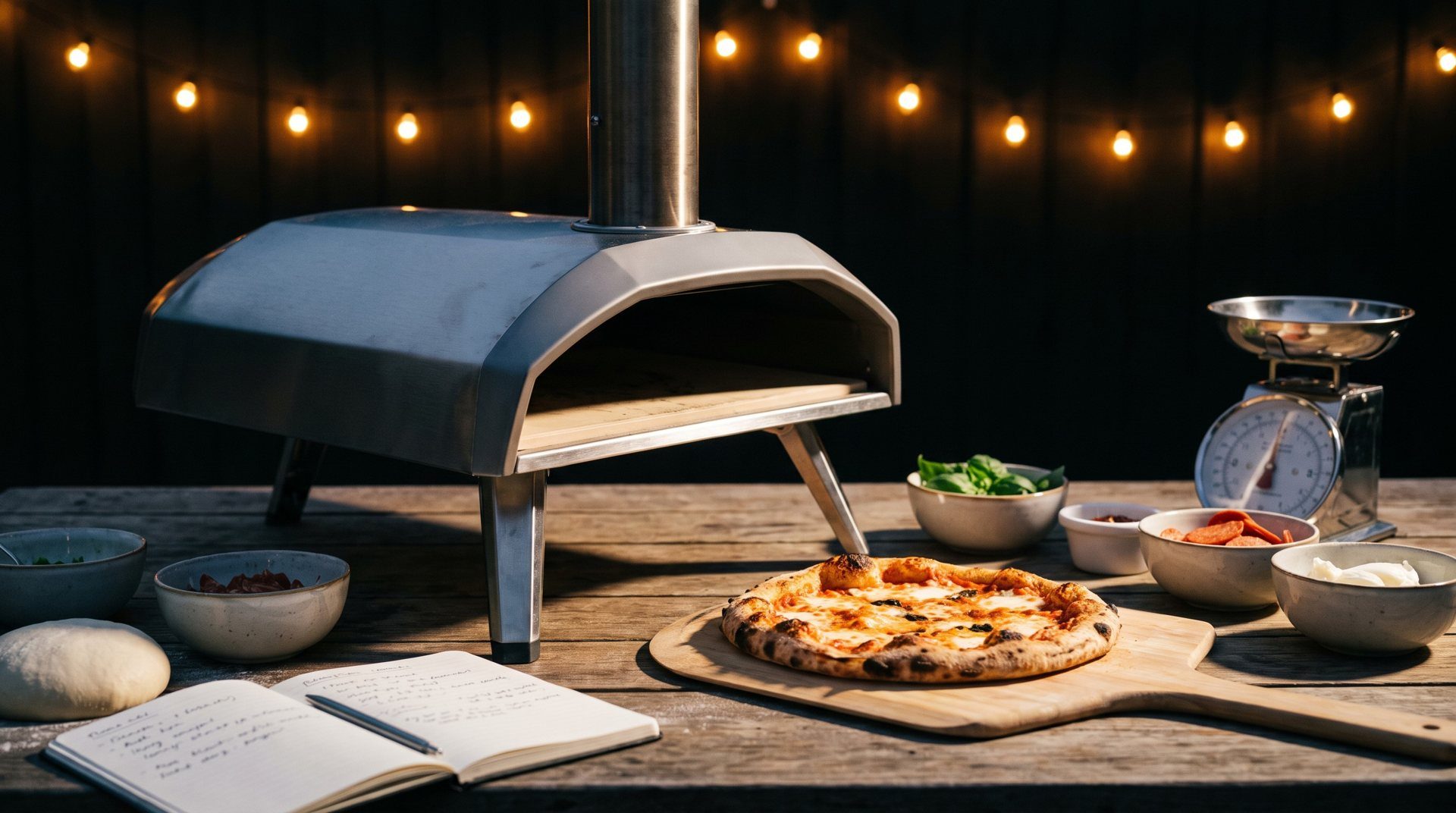
The journal
Your oven, your fridge, your mixer: your constants replace the general averages.

A pizza dough engine you can check
Not a table of recipes. An engine that models fermentation, flour and heat — and tells you why, not just how much.
Type what you put in. We tell you what it is.
989
assertions passing
2,845
parity vectors
12
documented styles
11
modelled flours
0
PHP / browser gap
Fermentation
Fermentation speed is not a straight line: it creeps up to 35 °C, peaks, then collapses. That asymmetry is why your dough runs away in July and refuses to move in the cellar. Fornello integrates the curve instead of approximating it, so 48 h at 4 °C and 8 h at 20 °C become comparable.
CTMI model — Tmin −3 °C, Topt 35 °C, Tmax 45 °C
Heat
What burns or browns the bottom of your pizza is not the oven setting: it is the thermal effusivity of the material under the dough. Steel pulls heat out so fast that at 285 °C it delivers exactly what a stone delivers much hotter. It is also why a Neapolitan biscotto floor holds 450 °C without charring in ninety seconds.
Semi-infinite contact — e = √(k·ρ·c)
Flour
We blend P and L separately, then divide. Averaging the individual ratios gives 0.95 where the true answer is 0.89 — and that is the difference between a dough you can open and one that springs back.
Maturation
At 4 °C the yeast works at 10 % of its speed, the protease at 36 %. Cold relaxes your dough 3.4 times faster than it makes it rise — hence the doughs that stick at the staglio with the yeast having nothing to do with it.
Sourdough
The culture grows during fermentation, so a smaller inoculation has more doublings ahead of it. The law is a 0.6 power, and it reproduces the landmarks every baker knows.
Gluten-free
Without gluten, W and P/L are meaningless. Fornello does not display them and says why: the structure comes from a hydrocolloid gel, not from a network that does not exist.
Not an image or a text: an object that holds the fermentation load, the target W and P/L, the interface temperature.
The solver searches YOUR flours for the blend that reaches the same targets, and quantifies the gap when your pantry cannot get there.
Same load, not the same hours: your kitchen is not at the temperature of theirs. And maturation is adjusted along with the rise.
Same temperature at the dough/floor interface, not the same setting, because your material does not conduct like theirs.
The calculation exists twice: in PHP on the server, in JavaScript in your browser. That is what makes the calculator instant and usable offline. It is also the classic way to end up with two different truths.
So the verification chain refuses to pass if the two diverge: 2,845 vectors generated from the PHP are replayed in JavaScript, and the slightest gap beyond one billionth stops everything. Constants are exported by reflection from the code, never copied by hand.
Concretely: what the home page computes in front of you is exactly what the server would compute. Not "roughly". Exactly.